Pork and cabbage jiaozi bring crisp, golden bottoms together with a juicy ginger-scallion filling. This approachable Chinese dumpling recipe uses store-bought wrappers and a pan-steam method, so you can make a satisfying batch at home without special equipment.
Jiaozi are Chinese dumplings with regional fillings and cooking methods. China Culture describes them as part of longstanding food traditions; this home version uses familiar pork and cabbage with the skillet method often called potsticker-style cooking.
Why This Pork and Cabbage Jiaozi Recipe Works
- A short salt-and-squeeze step removes excess cabbage moisture, helping the filling stay savory rather than watery.
- Covered steaming finishes the pork gently while softening the wrappers.
- A final uncovered minute restores the crisp, browned base.
Ingredients and Smart Substitutions
Napa cabbage is mild and easy to squeeze dry; green cabbage also works when chopped very finely. Ground pork gives a juicy filling, while ground chicken can be substituted if cooked to 165°F (74°C). Choose round dumpling wrappers and thaw frozen wrappers according to package directions.
Tips for the Best Results
Keep wrappers covered with a barely damp towel and use about 2 teaspoons filling per 3-inch wrapper. Seal firmly without trapping filling in the seam. Cook in batches rather than crowding the skillet. Ground pork should reach 160°F (71°C); ground poultry should reach 165°F (74°C), according to the FoodSafety.gov temperature chart.
There is no single universal jiaozi filling or shape; households adapt dumplings to region, season, and preference. Read China Culture’s overview of jiaozi traditions for context. This recipe is one practical pork-and-cabbage interpretation, not a claim to represent every regional style.
Recipe Card
The recipe card below has the full ingredient list, timing, and step-by-step method. Follow package directions where products differ, and adjust seasoning to taste.
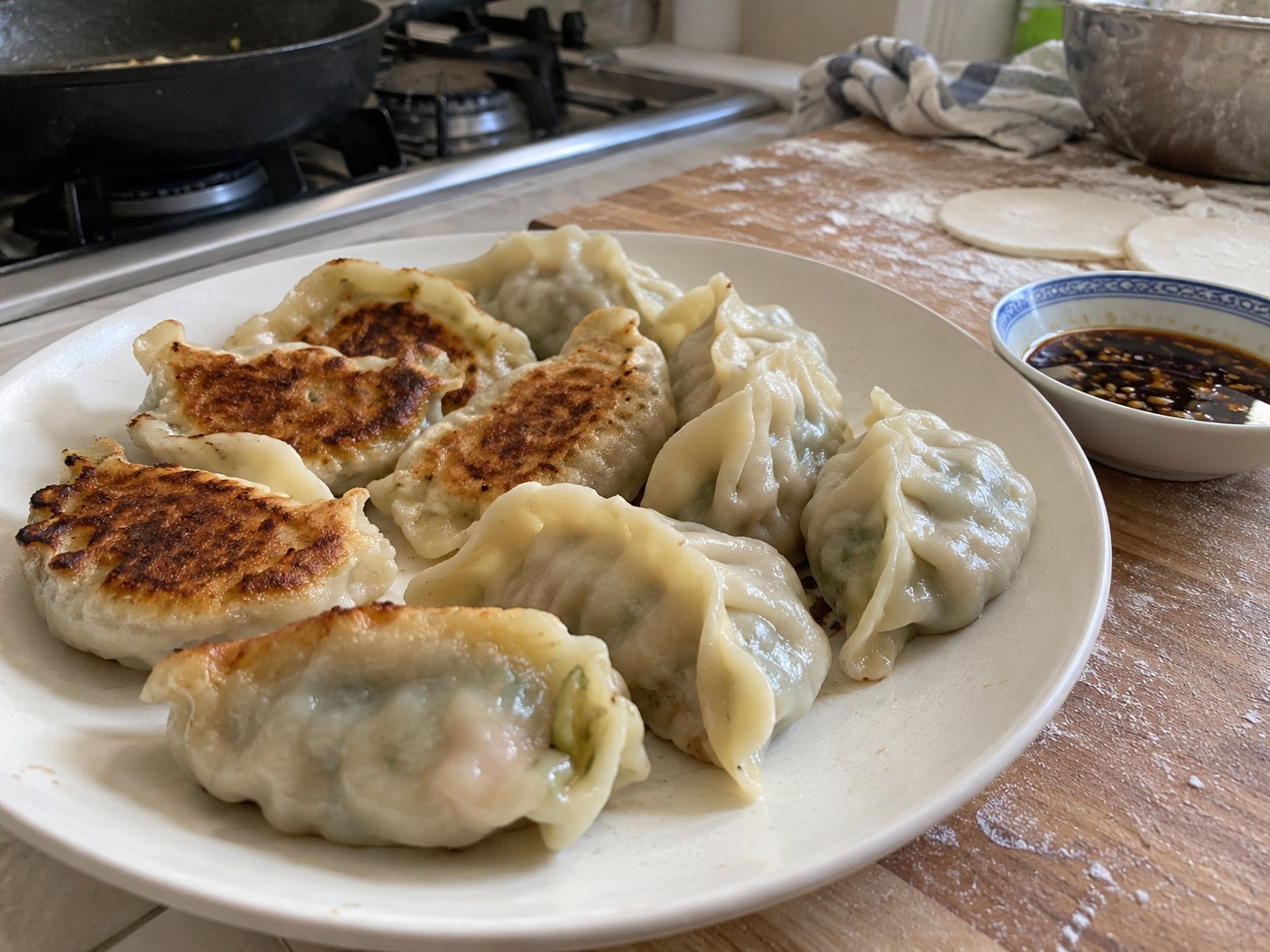
Pan-Fried Pork and Cabbage Jiaozi
Ingredients
Method
- Toss the chopped cabbage with salt and let stand 10 minutes. Squeeze out excess liquid with clean hands or a towel so the filling does not become watery.
- Mix the cabbage, pork, scallions, ginger, soy sauce, and sesame oil just until combined. Keep chilled while you wrap.
- Place about 2 teaspoons filling in the center of each wrapper. Moisten half the edge with water, fold over, and press firmly to seal. Keep finished dumplings covered so wrappers do not dry out.
- Heat oil in a large nonstick skillet over medium heat. Arrange dumplings flat-side down in one layer; work in batches if needed. Cook 2 to 3 minutes until the bottoms are golden.
- Carefully add 1/3 cup water to the skillet for each batch and cover immediately. Steam 6 to 8 minutes, until wrappers are tender and the pork reaches 160°F (71°C) on a thermometer.
- Remove the lid and let water evaporate. Cook 1 to 2 minutes to re-crisp the bottoms. Serve hot with soy sauce, rice vinegar, and chili crisp.
Estimated Nutrition
Estimated per serving (about 6 dumplings with dipping sauce). Values vary with wrapper size, pork fat percentage, and the amount of sauce used.
| Nutrient | Per serving |
|---|---|
| Calories | 350 kcal |
| Carbohydrates | 49 g |
| Protein | 13 g |
| Total fat | 11 g |
| Saturated fat | 3 g |
| Fiber | 3 g |
| Total sugars | 3 g |
| Sodium | 550 mg |
Storage and Food Safety
Refrigerate cooked dumplings in a shallow airtight container within 2 hours and use within 3 to 4 days. Reheat covered with a splash of water, then uncover to crisp the base; reheat leftovers to 165°F (74°C). Freeze uncooked dumplings in one layer until solid, then transfer to a freezer bag and cook from frozen, extending the covered steaming time.
Frequently Asked Questions
Can I freeze jiaozi before cooking?
Yes. Freeze in one layer until firm, then transfer to a freezer-safe bag. Cook from frozen without thawing and extend the covered steam until the filling is fully cooked.
Can I boil these dumplings instead?
Yes. Simmer in batches in gently boiling water until they float and the filling is cooked through. They will be tender rather than crisp-bottomed.
Why did my dumplings open in the pan?
Wrappers may have dried out, been overfilled, or not been sealed firmly. Keep unused wrappers covered and press dampened edges together without trapping air.
More SkilletGlow Recipes
For a hands-on dinner with savory filling, try our homemade cheeseburgers another night. A smaller dumpling batch also pairs well with a bowl of shoyu chicken ramen.