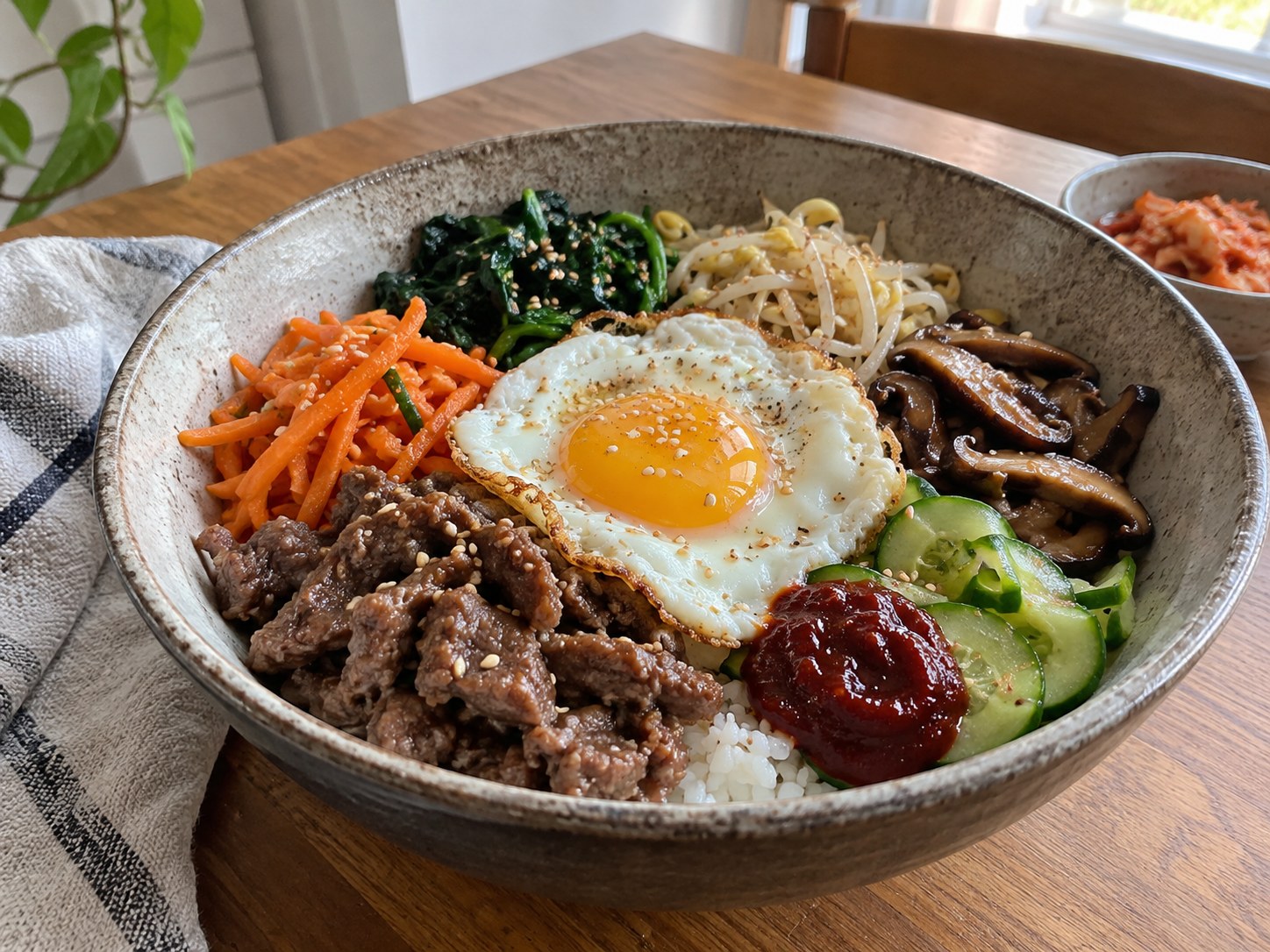
Korean beef bibimbap is a colorful rice bowl topped with savory meat, vegetables, egg, and a bold chile sauce. This weeknight version keeps the spirit of mixing everything together while using familiar vegetables and quick cooking steps.
Bibimbap means a mixed rice dish, and toppings change by region and season. Korea Tourism Organization describes a classic bowl of rice with assorted vegetables and stir-fried meat. This flexible recipe follows that structure and lets each person adjust the gochujang to taste.
Why This Korean Beef Bibimbap Recipe Works
- The toppings cook separately, so the vegetables keep their color and texture.
- Ground beef browns quickly and makes the bowl practical for a weeknight.
- A quick sauce combines sweet, tangy, and spicy flavors without a long simmer.
Ingredients and Smart Substitutions
Short-grain rice is pleasantly sticky, but any cooked rice works. Gochujang varies in heat and salt, so start with the suggested amount and thin it with water to taste. Spinach, carrot, cucumber, and thoroughly cooked bean sprouts make a colorful mix; cook the sprouts until steaming hot throughout instead of adding them raw. Sautéed mushrooms or zucchini also work well.
Tips for the Best Results
Cook ground beef to 160°F (71°C), and cook eggs until whites and yolks are firm if following FoodSafety.gov guidance. Keep raw meat utensils separate from ready-to-eat vegetables. The safe-temperature chart is a useful quick reference.
The name bibimbap reflects the idea of mixing rice and toppings together. The Korea Tourism Organization’s bibimbap guide notes the combination of rice, seasonal vegetables, and stir-fried meat; regional and household versions vary, so consider this an adaptable home-style bowl.
Recipe Card
The recipe card below has the full ingredient list, timing, and step-by-step method. Follow package directions where products differ, and adjust seasoning to taste.
Korean Beef Bibimbap
Ingredients
Method
- Whisk the gochujang, rice vinegar, honey, sesame oil, and water until smooth. Add water a teaspoon at a time if you prefer a thinner sauce.
- Warm a little oil in a skillet over medium heat. Cook the carrot for 2 to 3 minutes until just tender but still bright; transfer to a plate.
- Add spinach with a tablespoon of water and cook until wilted, about 1 minute. In a separate pot, blanch the bean sprouts in actively boiling water for 2 to 3 minutes, until fully hot, then drain well.
- In the same skillet, cook beef and garlic until browned, breaking it into small pieces. Stir in soy sauce and sesame oil; cook until the beef reaches 160°F (71°C).
- Fry the eggs in the remaining oil to your preferred doneness; cook until whites and yolks are firm if following general food-safety guidance.
- Divide warm rice among four bowls. Arrange beef, carrot, spinach, sprouts, and cucumber in separate sections. Top each with an egg, sesame seeds, and sauce. Mix at the table before eating.
Estimated Nutrition
Estimated per bowl (one-quarter of the recipe, including rice, beef, vegetables, sauce, and one egg). Exact values vary with beef leanness, gochujang brand, and rice portion.
| Nutrient | Per serving |
|---|---|
| Calories | 560 kcal |
| Carbohydrates | 65 g |
| Protein | 28 g |
| Total fat | 20 g |
| Saturated fat | 5 g |
| Fiber | 6 g |
| Total sugars | 9 g |
| Sodium | 920 mg |
Storage and Food Safety
Store rice, beef, and cooked vegetables in shallow containers and refrigerate within 2 hours (within 1 hour when the temperature is above 90°F / 32°C). Use leftovers within 3 to 4 days and reheat rice and beef to 165°F (74°C), adding a splash of water to loosen the rice. See the USDA FSIS leftovers guidance. Fry fresh eggs when serving for the best texture.
Frequently Asked Questions
Can I make bibimbap vegetarian?
Yes. Replace beef with pan-seared tofu or mushrooms seasoned with soy sauce and sesame oil. Check gochujang labels if you need a specific dietary fit.
Is bibimbap very spicy?
The bowl can be mild; most heat comes from gochujang. Serve the sauce on the side and let everyone add as much as they like.
Can I prep the toppings ahead?
Yes. Cook the beef and vegetables up to 3 days ahead, chill promptly, and reheat thoroughly. Slice cucumber and fry eggs close to serving.
More SkilletGlow Recipes
If you enjoy savory rice dinners, also try our easy chicken and rice recipe. For a bowl built around noodles and a deeply savory broth, see homemade shoyu chicken ramen.