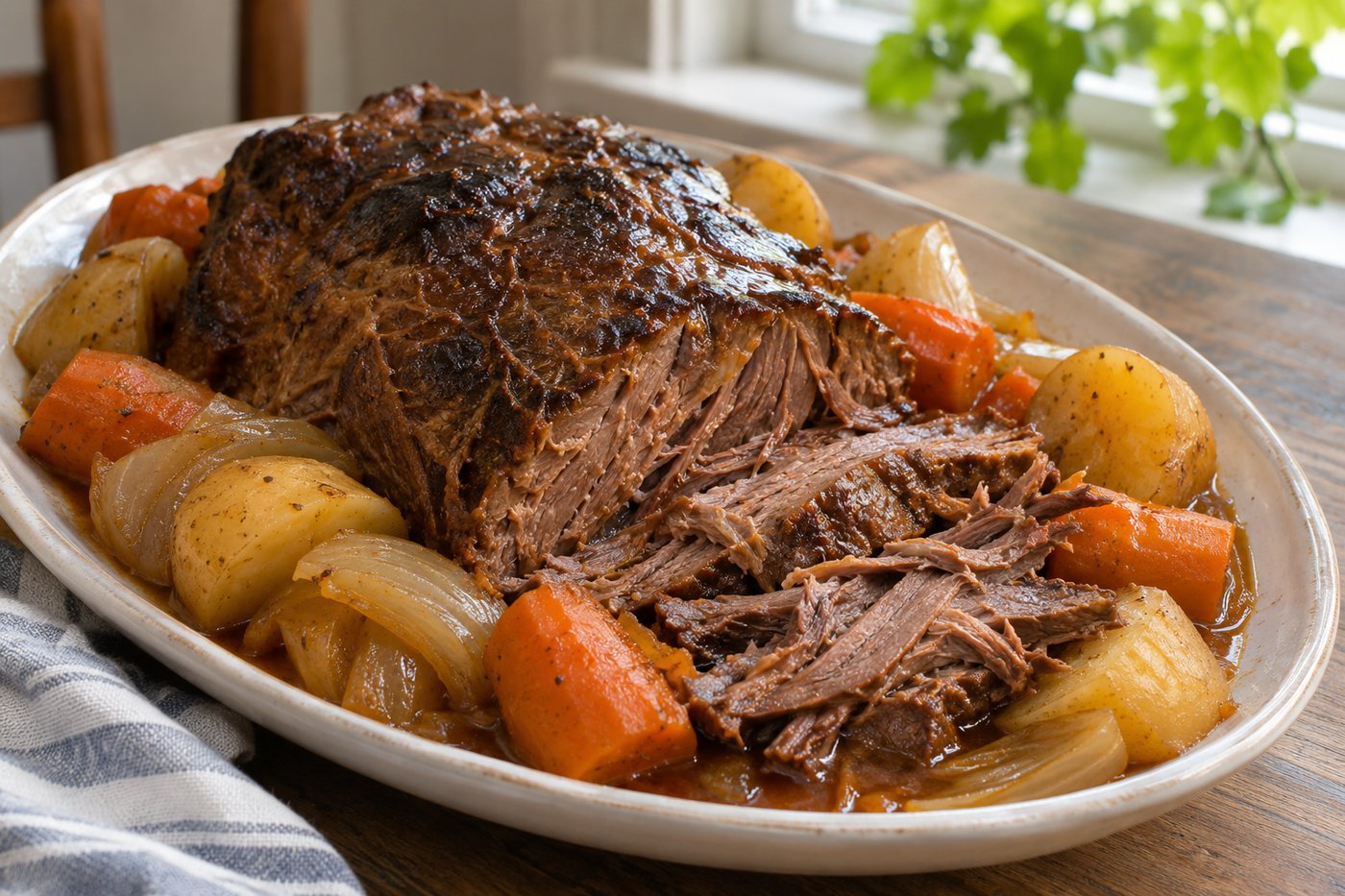
Pot roast is a slow braise, not a quick roast-beef dinner. Beef chuck becomes tender in a covered pot while onion, broth and herbs form the gravy. Adding potatoes and carrots later keeps them from disintegrating before the meat is ready. The result is a complete family dinner with a realistic allowance for several hours in the oven and a short rest before serving.
What makes this recipe work
Choose chuck rather than a lean round roast for this timing and texture. Connective tissue takes time to soften, so a roast that is safely cooked can still be tough; continue gentle braising until a fork twists easily. Keep the lid snug to limit evaporation. A very wide pot may need more liquid than a narrow one. Do not bury the roast under broth: enough liquid for a moist braise is different from boiling it. The optional starch thickens the gravy without needing additional flour on the meat.

Planning your cooking
Yield: 8 servings. Allow approximately 25 minutes of preparation, 270 minutes of cooking, and 15 minutes of marinating, rising or resting. Several preparation steps can overlap with cooking; read the complete method before heating the pan. Follow the texture and temperature cues rather than the timer alone.

Traditional Pot Roast with Carrots and Potatoes
Ingredients
Method
- Heat oven to 300°F (150°C). Pat beef thoroughly dry and season with 1 teaspoon salt and the pepper. Heat oil in a 6-quart ovenproof Dutch oven over medium-high heat. Brown roast for 4–5 minutes on each broad side and briefly on its edges. Transfer to a plate.
- Lower heat to medium, add onions and soften for 5 minutes. Stir in garlic and tomato paste for 1 minute. Add broth and Worcestershire, scraping the bottom clean of browned bits. Return beef and juices; add bay and thyme. Liquid should reach roughly halfway up the roast, not cover it.
- Bring to a gentle simmer, cover tightly and transfer to the oven for 2 1/2 hours. Turn the roast once if convenient and check that a little liquid remains. Add hot water if the pot becomes dry; the oven should maintain a quiet braise.
- Add potatoes and carrots around the meat, seasoning vegetables with remaining 1/2 teaspoon salt. Cover and cook another 60–90 minutes, until vegetables are tender and a fork twists easily in the beef. If vegetables finish first, remove them and continue braising the roast until tender.
- Transfer roast to a board, tent loosely and rest 15 minutes. Remove herbs and skim excess fat from the liquid. For thicker gravy, bring juices to a simmer and whisk in optional cornstarch slurry; simmer 2 minutes.
- Slice across the grain if the roast holds together, or pull into large pieces. Serve with vegetables and gravy. Allow up to 4 hours of cooking; a thick roast may need longer, so plan a little extra time rather than raising the oven temperature.
Notes
Questions and useful substitutions
Can I make it ahead? Yes; chill the meat with its juices, then reheat gently the next day. Can I cook it faster at high heat? Higher heat can dry the outer meat before the connective tissue softens. What if the gravy is too salty? Use unsalted broth initially; once reduced, dilute with water before adding any more seasoning.
Storage and reheating
Divide into shallow containers and refrigerate within 2 hours for 3–4 days. Reheat meat and gravy together to 165°F (74°C). Freeze beef with gravy for up to 3 months for best quality; potatoes may become grainier after thawing.
The USDA guidance on reheating leftovers explains why chilled food should be reheated promptly to 165°F rather than slowly warmed in a slow cooker.
Estimated nutrition per serving
Rough estimates for one of 8 equal portions. Suggested sides, optional toppings and additional seasoning are excluded. Actual values depend on brands, edible yield and portions; these are not laboratory measurements.
| Nutrient | Amount |
|---|---|
| Calories | 550 kcal |
| Carbohydrates | 26 g |
| Protein | 43 g |
| Total fat | 30 g |
| Saturated fat | 11 g |
| Fiber | 4 g |
| Total sugars | 7 g |
| Sodium | 850 mg |
What to cook next
For a complementary side or another dinner idea, explore Parmesan roasted potatoes and beef cottage pie. Browse the dinner collection for more ideas.