A practical meal plan is less about cooking every night from scratch and more about knowing what is already in your kitchen, what needs to be used first, and how one ingredient can support more than one meal. A short weekly routine can make shopping calmer, help leftovers find a purpose, and reduce the amount of food that gets forgotten.
Start with a quick kitchen inventory
Before writing a shopping list, check the refrigerator, freezer, and pantry. Note produce that is ripe, opened dairy, cooked grains, and leftovers that should be used soon. Put the most time-sensitive foods where you can see them. This simple “use first” list gives your plan a starting point and helps prevent buying ingredients you already have.
Plan a few flexible meals, not a rigid schedule
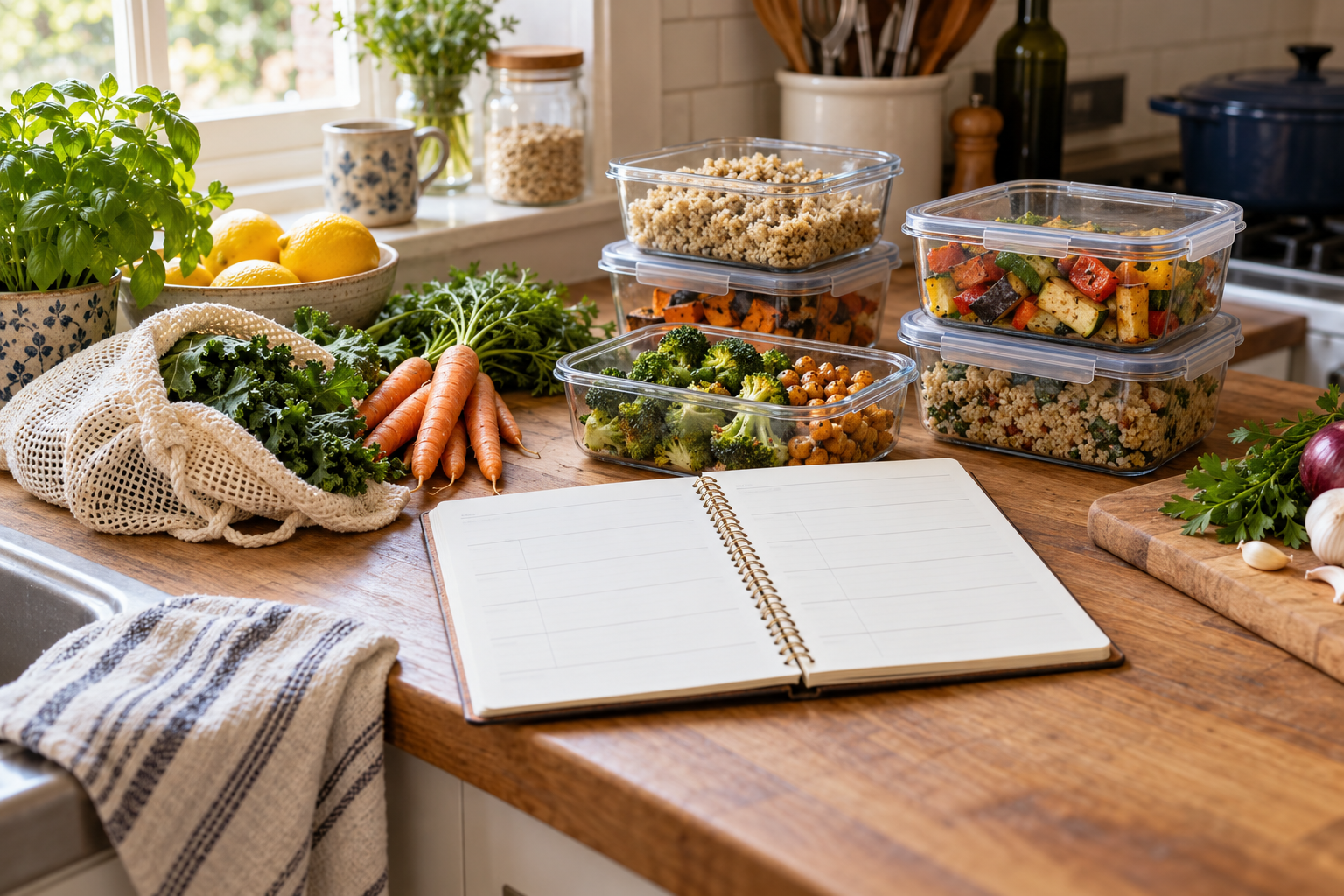
Choose meals around your actual week: busy evenings, days when you can cook, and nights when leftovers make sense. Pick two or three main dishes and reuse ingredients in different ways. Roast a tray of vegetables for dinner, then add the extras to a grain bowl or omelet. Cooked chicken can become tacos one night and a quick soup another. For inspiration, browse our Quick Meals and Dinner collections.
Shop from a focused list
Group your list by produce, proteins, dairy, pantry staples, and freezer items. Buy quantities that match your plan, and leave room for one flexible meal that can use whatever remains. If a recipe calls for an ingredient you rarely use, consider a practical substitute or choose another recipe that shares ingredients you already own.
Give leftovers a planned destination
When putting food away, portion it into shallow containers, label it with the date, and add it to a “leftovers” night on the calendar. Freeze extra portions if you will not eat them within a few days. FoodSafety.gov advises refrigerating perishable food within two hours (one hour when the temperature is above 90°F / 32°C), keeping the refrigerator at 40°F / 4°C or below, and using most cooked leftovers within three to four days. See its food-safety guidance for details.
Store ingredients so they stay visible
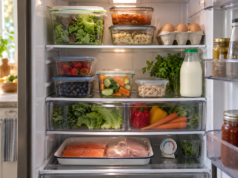
Keep foods in suitable containers and avoid hiding near-term ingredients behind taller items. Store raw meat in a sealed container on the lowest refrigerator shelf to prevent drips from reaching ready-to-eat food. Use airtight containers for dry goods, and follow package directions for storage. Our guides to storing food safely and organizing the kitchen can help create an easy-to-maintain system.
Review the week and adjust
At the end of the week, notice what was left unused and why. Maybe the plan included too many fresh items, portions were larger than needed, or a meal required more time than expected. Adjust the next list instead of aiming for a perfect week. Keep a small “use soon” area in the fridge and make a flexible soup, salad, or skillet meal when several ingredients need attention.
A little planning turns ingredients into meals before they are forgotten. Start with what you have, shop for the week you actually expect, and give leftovers a clear place in the plan.
Sources: FoodSafety.gov: 4 Steps to Food Safety and USDA: Food Loss and Waste for Consumers.