A useful kitchen does not need every gadget on the shelf. Start with tools that solve frequent problems, are easy to clean, and work for more than one kind of meal. Your cooking habits, storage space, and budget matter more than a long shopping list. Add a tool when you can name the task it will make easier.
Build a dependable everyday kit
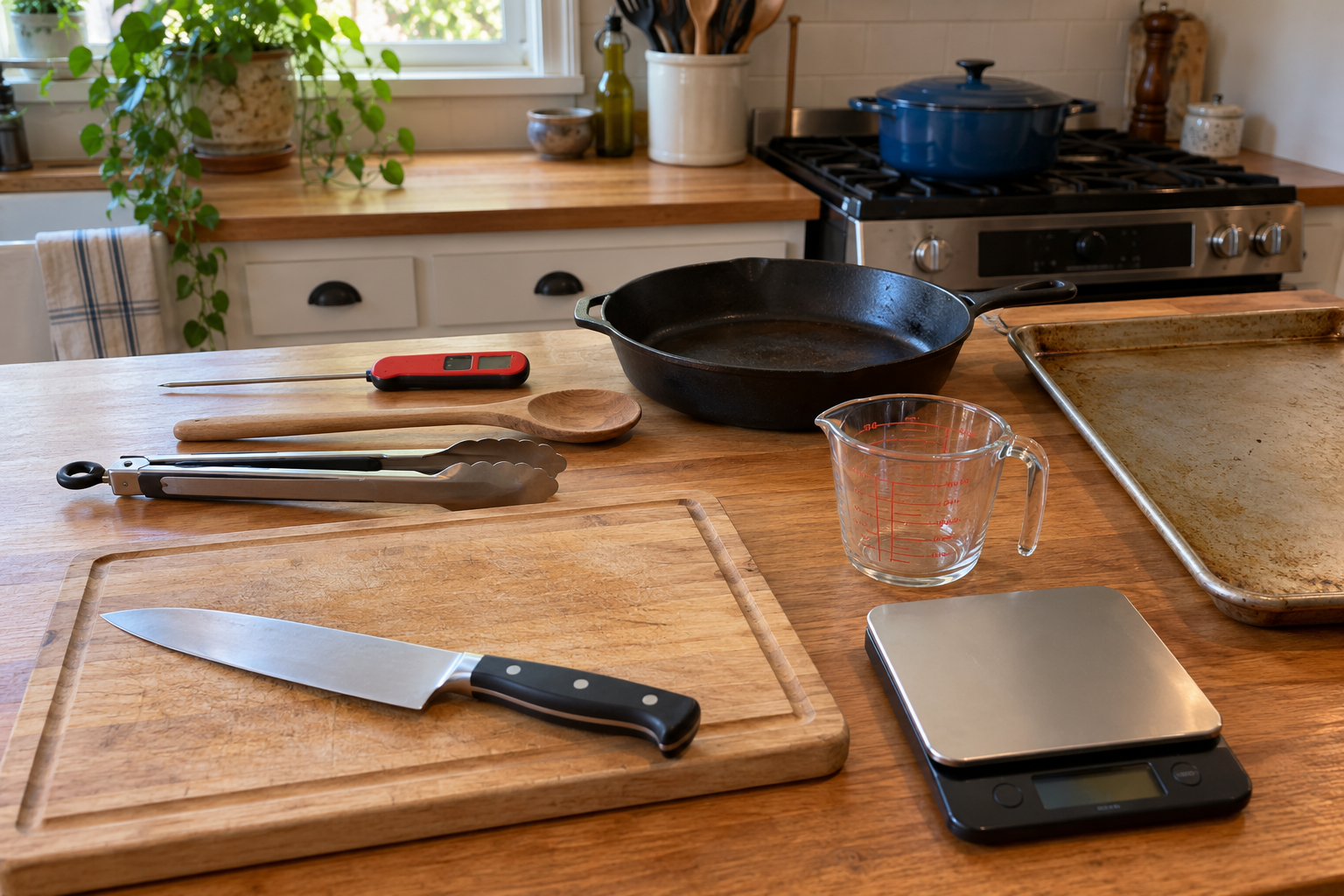
A sharp chef’s knife and a stable cutting board cover most everyday chopping. A small paring knife handles fruit and other delicate jobs, while a serrated knife is helpful for bread and ripe tomatoes. Keep knives sharp and store them safely; a dull knife can slip more easily. A sturdy skillet, a saucepan with a lid, and a rimmed sheet pan give you flexible options for stovetop meals, grains, sauces, and roasting.
Choose measuring tools that match how you cook
Measuring cups and spoons are convenient for everyday recipes. A digital kitchen scale is especially useful for baking, portioning, and repeating a result accurately. A liquid measuring cup is easier to fill and read for water, broth, and oil. You do not need a separate gadget for every ingredient; choose pieces that fit your cabinets and that you will actually reach for.
Spend on safety and control
An instant-read food thermometer is one of the most useful upgrades for cooking meat, poultry, seafood, and egg dishes. It gives you a measurement instead of relying on color or timing alone. The FDA’s food-safety guidance explains when and how to use a food thermometer. A pair of tongs, a heat-safe spatula, and a wooden spoon are simple tools that help you turn, stir, and serve without crowding the utensil drawer.
Buy small appliances for a real routine
A blender, food processor, stand mixer, air fryer, or rice cooker can be valuable when it solves a job you do often. Before buying one, consider how much counter or cupboard space it needs, whether its parts are easy to clean, and whether an item you already own can do the same task. Borrowing or using a smaller, less expensive model first can help you learn whether the appliance fits your kitchen.
Keep the kit compact and maintained
Favor durable, easy-to-clean pieces over novelty gadgets. Check that handles feel secure, pans suit your cooktop, and storage containers stack comfortably. Replace damaged tools that are unsafe or difficult to clean, but do not discard a working item just to match a set. Wash tools according to their care labels, dry knives before storing them, and keep frequently used items close to the work surface.
If you cook often, a simple setup can handle a wide range of meals, from one-pot chicken and rice to easy chocolate cake. Start with the basics, notice what slows you down, and upgrade one item at a time. That keeps your kitchen practical without filling it with appliances you rarely use.
Source: U.S. Food and Drug Administration: Food Safety at Home.