Good food storage is less about buying matching containers and more about controlling temperature, moisture, and time. A few simple habits help ingredients stay fresh, make leftovers easier to use, and reduce the chance of food waste. These guidelines are practical reminders; follow package instructions and use official storage charts for specific foods.
Set cold appliances to safe temperatures
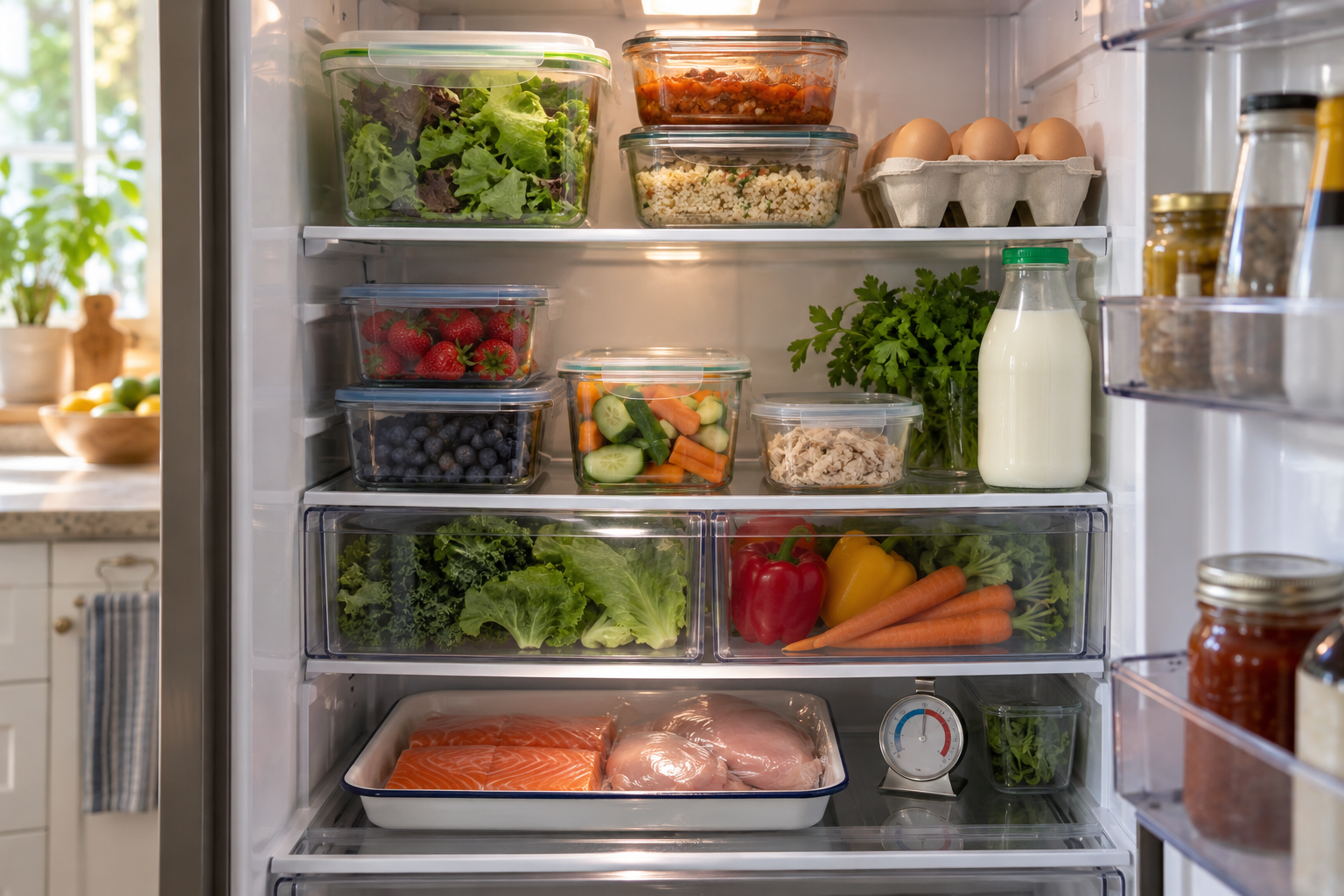
Keep the refrigerator at 40°F (4°C) or below and the freezer at 0°F (-18°C) or below. An inexpensive appliance thermometer is more reliable than guessing from a dial. Avoid overfilling shelves so cold air can circulate, and open the doors only as long as needed. The FDA refrigerator thermometer guide explains how to check these temperatures.
Cool and store leftovers promptly
Refrigerate or freeze perishable food within two hours, or within one hour when the surrounding temperature is above 90°F (32°C). Divide a large pot of soup or casserole into shallow containers so it cools more quickly, then cover and label each container with the date. Do not leave food on the counter until it reaches room temperature. Keep raw meat, poultry, and seafood sealed on the lowest shelf, below ready-to-eat foods, to prevent drips from contaminating them.
Use a simple first-in, first-out system
Move older packages and leftovers toward the front, and place newer items behind them. Keep a small “use first” area in the refrigerator for opened ingredients and food that should be eaten soon. Write the food name and date on leftovers; the label removes guesswork when several containers look alike. For cooked meat or poultry leftovers, FoodSafety.gov lists a refrigerator storage window of three to four days. Check the Cold Food Storage Chart for other foods and follow product-specific instructions.
Protect dry goods and produce
Store flour, grains, cereal, and snacks in clean, dry, tightly closed containers when the package calls for it. Keep pantry shelves cool and dry, away from the oven, dishwasher, or direct sun. Use original packaging when it gives important cooking or storage directions, or keep that information with the container. Store fruits and vegetables according to their needs: some keep best refrigerated, while items such as potatoes and onions generally need a cool, dry, ventilated spot. Avoid washing berries and leafy greens until you are ready to use them unless the product instructions say otherwise.
Freeze for quality and plan what to thaw
Freeze food in meal-sized portions, remove excess air from freezer-safe packaging, and label the contents and date. Freezing at 0°F keeps food safe while it remains continuously frozen, though quality can decline over time. Thaw food in the refrigerator, in cold water, or in the microwave when it will be cooked immediately; do not thaw perishable food on the counter. Plan the next meal around items already thawed or opened.
A clear refrigerator makes it easier to cook what you have. See our guides to organizing the pantry and refrigerator and cleaning kitchen surfaces safely. When you are unsure whether a perishable food has been stored safely, do not taste it to decide; use current official guidance and discard it when safety is uncertain.
Sources: FDA refrigerator temperatures; FoodSafety.gov cold-storage chart; FoodSafety.gov food-safety steps.