A clean kitchen is easier to cook in, but good cleaning habits also protect food and keep everyday odors from building up. The most useful approach is simple: remove crumbs and grease promptly, use a cleaner that is appropriate for the surface, and follow the product label. You rarely need a shelf full of specialty sprays.
Start with the safest basic method
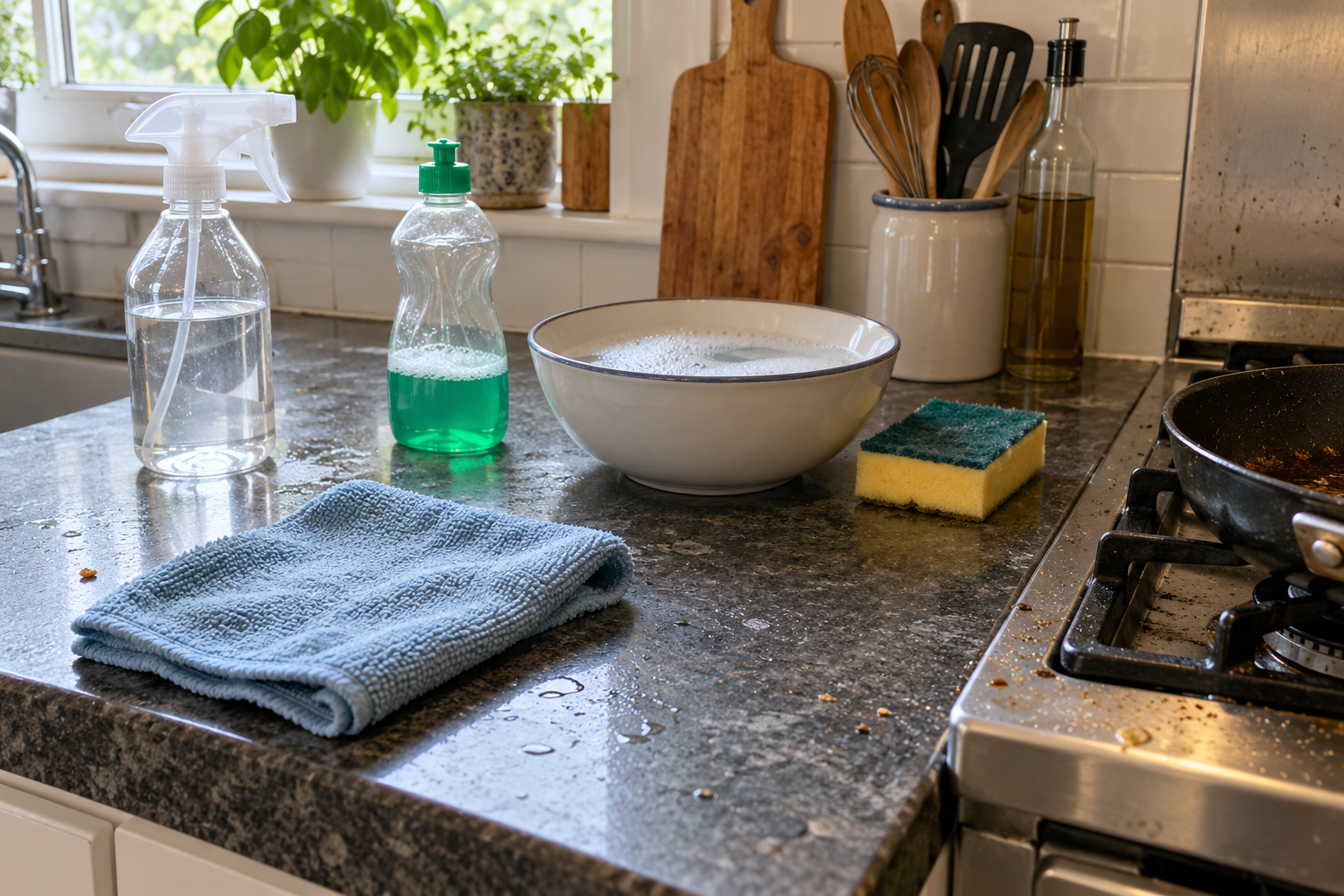
For many routine messes, warm water, dish soap, and a clean cloth are enough. Clear away food and loose crumbs first, then wash the surface and wipe away soap residue with clean water if the surface touches food. Use separate cloths for raw-meat spills and ordinary counter wiping, and wash reusable cloths often. FoodSafety.gov recommends cleaning hands, utensils, and surfaces regularly as part of its four food-safety steps.
Lift cooking grease without damaging surfaces
Let a greasy stovetop or backsplash cool completely. Wipe away loose residue, then apply a small amount of dish soap or a surface-safe degreaser according to its label. Give the cleaner the stated contact time; scrubbing harder is not always better. Use a non-scratch cloth or sponge on delicate finishes, and test an unfamiliar product in a hidden spot. Avoid soaking wood, natural stone, or electrical controls, and never spray cleaner directly into burners, vents, or appliance openings.
Treat stains according to the material
Blot spills instead of rubbing them deeper into a porous surface. For dried food on a pan or counter, soften it with warm soapy water before lifting it with a plastic scraper. Check the manufacturer’s care instructions before using abrasive pads, acidic cleaners, or powders on stone, nonstick coatings, stainless steel, and painted cabinets. A method that works on a baking sheet can scratch or dull another finish.
Remove odors at their source
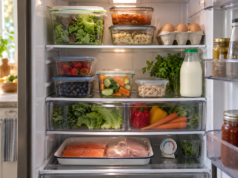
Empty the refrigerator, discard spoiled food, and wash removable drawers with mild detergent. Wipe the interior, dry it well, and return food in sealed containers. Clean trash and recycling bins after leaks, and let them dry before adding a fresh liner. If an odor lingers, check the drain pan or filter using the appliance manual. Baking soda may help absorb some refrigerator odors, but it does not sanitize a surface or make unsafe food safe.
Never mix cleaning products
Use one product at a time and follow its label, including dilution, ventilation, and rinse directions. Never mix bleach with ammonia, vinegar, acids, or another cleaner: the U.S. Environmental Protection Agency warns that mixing cleaning products can release toxic vapors. Keep products in their original labeled containers, away from children and food. Do not use a disinfectant on a food-contact surface unless the label allows it, and follow its instructions for rinsing.
A five-minute reset after cooking prevents most stubborn buildup: wash splashes while they are fresh, wipe handles and high-touch spots, and leave the sink and cloths clean and dry. For a more organized routine, see our guide to organizing kitchen cabinets, the refrigerator, and pantry.
Sources: U.S. EPA guidance on cleaning products and indoor air; FoodSafety.gov: 4 Steps to Food Safety.