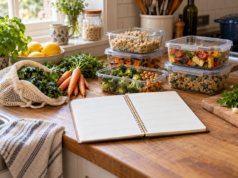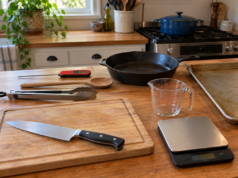
A well-organized kitchen makes everyday cooking calmer: ingredients are easier to find, leftovers are less likely to be forgotten, and shelves are simpler to clean. You do not need matching containers or a large pantry. Start by giving each item a practical home, then keep the most-used foods within easy reach.
Start with a quick kitchen reset
Choose one area at a time so the job stays manageable. Empty a cabinet or shelf, wipe it, and group what belongs there: baking supplies, breakfast foods, cooking oils, canned goods, snacks, or dinner staples. Check dates and discard anything spoiled or damaged. Move duplicates together so you can see what you already have before shopping.
Make cabinets work for the way you cook
Keep everyday plates, glasses, pans, and seasonings close to the places where you use them. Place heavy cookware on lower shelves, and put occasional appliances higher or farther back. A small turntable can make oils and spices easier to reach; shelf risers can help you see cans and jars in a deep cabinet. Leave a little open space rather than packing shelves tightly, and store heavy glass jars where they cannot fall.
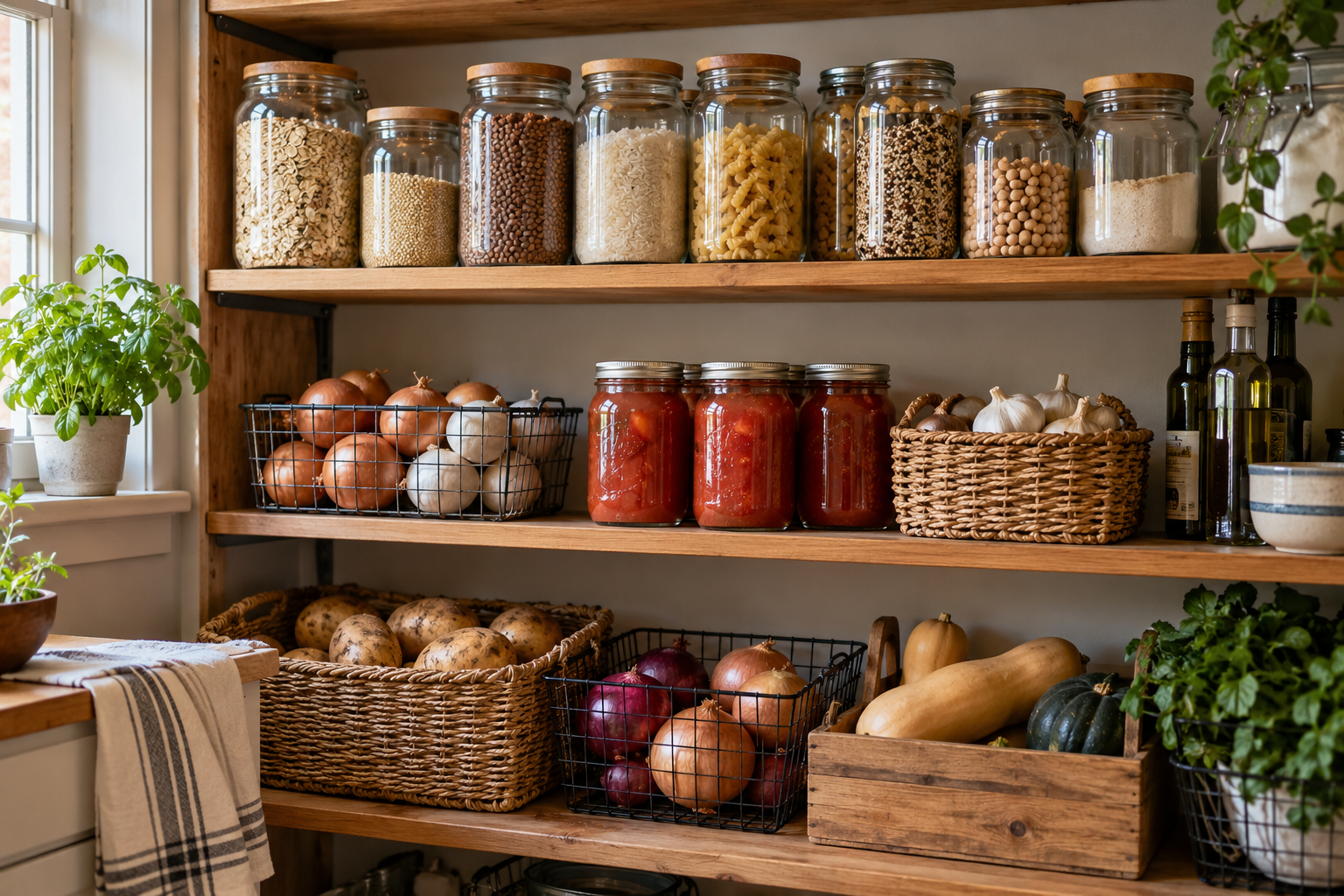
Group ingredients by task instead of buying a full set of containers. A baking bin can hold flour, sugar, baking powder, and measuring tools; a weeknight-dinner zone can keep pasta, rice, canned tomatoes, and broth together. Store dry goods in clean, dry, airtight containers when that protects them from moisture or pests. Keep original labels or copy the product name and use-by date onto the container.
Organize the refrigerator for visibility and food safety
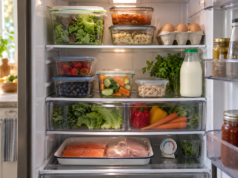
Set the refrigerator to 40°F (4°C) or below and use an appliance thermometer if the display is uncertain. Keep raw meat, poultry, and seafood sealed on the lowest shelf so juices cannot drip onto ready-to-eat food. Put leftovers and ingredients you want to use soon at eye level. Store foods in covered, clearly labeled containers, and avoid overcrowding so cold air can circulate.
Use the door for condiments and other items that tolerate temperature changes; the door is usually warmer than the shelves. Follow package storage directions for milk, eggs, and other perishables. Refrigerate perishable food within two hours, or within one hour when the temperature is above 90°F (32°C). The FDA advises keeping the refrigerator at 40°F or below and the freezer at 0°F. See the FDA food-storage guidance for details.
Create a pantry system you can maintain
Arrange pantry foods in simple groups: grains and pasta, canned goods, baking ingredients, breakfast, snacks, and oils or sauces. Put newer packages behind older ones so the items you already own get used first. This first-in, first-out habit is more useful than complicated labeling. Keep onions, potatoes, and other produce in a cool, dry, well-ventilated place when the label or reliable storage guidance calls for it; do not assume every fruit or vegetable belongs in the refrigerator.
Keep the system going in five minutes
Once a week, check the refrigerator before making a grocery list. Move foods that need using to the front, label leftovers with the date, and wipe up spills as they happen. FoodSafety.gov’s cold-storage charts can help you decide how long common refrigerated foods keep; when in doubt about food safety, throw it out.
A tidy cooking zone also makes meal planning easier. Try pairing pantry staples with a simple dinner such as easy beef enchiladas or keep a quick breakfast option ready with overnight oats with berries. Small, repeatable habits make the kitchen easier to use without turning organization into another project.