
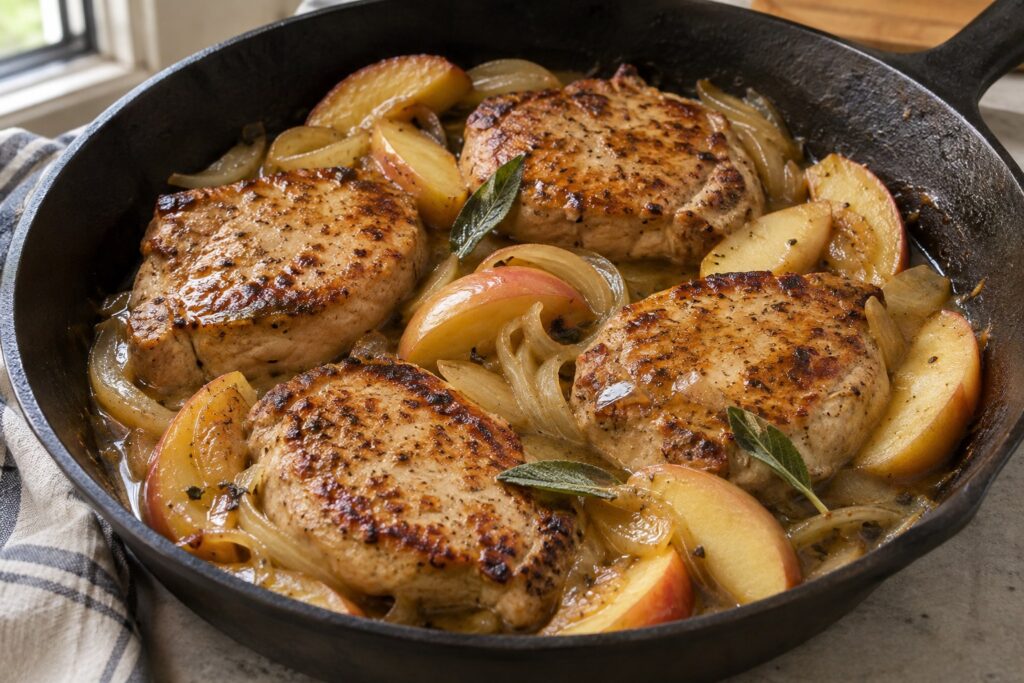
Pork chops, firm apples and sage share one skillet in this gently sweet pan sauce. Unsweetened apple juice supplies the cider-style flavor without requiring an alcoholic ingredient. The chops are finished by temperature, then rested, which is more reliable than assuming every chop cooks in the same number of minutes.
Choose chops of similar thickness
Four 2 cm chops cook more evenly than a mixed pack of thin and thick cuts. The stated weight is boneless meat; bone-in chops need different handling and may take longer. Pat the surfaces dry before searing. If the pan cannot hold all four with space around them, brown two batches and allow extra time.
Keep apples firm enough to turn
Firm eating apples hold wedges in the sauce. A very soft cooking apple can break down and thicken the liquid instead. Both results can taste good, but the texture differs. Avoid repeated vigorous stirring after the fruit softens. If the apples finish before the pork, lift them out and return them just before serving.
Check temperature through the side of a chop
Insert an instant-read thermometer sideways toward the center so the sensing area is in the thickest meat. Remove chops as they reach the target rather than waiting for the entire pan to look uniformly done. Rest on a clean plate. Do not reuse a plate that held raw pork unless it has been washed.

Skillet Pork Chops with Apples, Cider and Sage
Ingredients
Method
- Pat chops dry and season with salt and pepper. Heat oil in a large skillet over medium-high heat. Sear chops for about 3 minutes per side until browned, then transfer to a plate; they may still be undercooked.
- Lower heat to medium. Add butter, onion and apple wedges. Cook 6 to 8 minutes, turning gently, until the onion softens and apples color in places.
- Add apple juice and stock, scraping browned bits from the base. Stir in Dijon and sage, then simmer 3 minutes.
- Return chops and collected juices. Simmer gently for 3 to 7 minutes, turning once, until the thickest part of each chop reaches 145°F (63°C). Thickness determines the final time.
- Transfer chops to a clean plate and rest at least 3 minutes. If needed, simmer the sauce briefly to reduce while they rest. Serve each chop with a quarter of the apples and sauce.
Notes
Can I use cider?
Use unsweetened still apple cider in place of the juice if available. Hard cider changes the flavor and introduces alcohol, so it is not an automatic equivalent for every diner.
Why is my sauce thin?
A wide pan reduces faster than a deep one. Remove the cooked pork and simmer the sauce until it lightly coats a spoon, then taste before adding salt because reduction concentrates seasoning.
Keeping and reheating
Refrigerate within 2 hours and use within 3 days. Reheat gently with a little water until the pork reaches 165°F (74°C). Reheating can firm lean chops, so stop once hot. Freeze for up to 2 months for quality.
Nutrition per portion
Estimate for one of 4 servings from the complete recipe. Values are calculated from generic ingredient profiles and the listed weights, then rounded. Brands, trimming, moisture loss and actual portion size change the result. Optional accompaniments are excluded; this is not a laboratory analysis.
| Nutrient | Amount |
|---|---|
| Energy | 400 kcal |
| Protein | 37 g |
| Carbohydrate | 21 g |
| Fat | 19 g |
| Fiber | 3 g |
More recipes for another meal
Roasted Pork Tenderloin with Dijon and Herbs · Classic Creamy Coleslaw (Tangy, Crisp & Easy)
For the temperature checks used here, consult FoodSafety.gov’s safe minimum internal temperature chart.


Leave a Reply