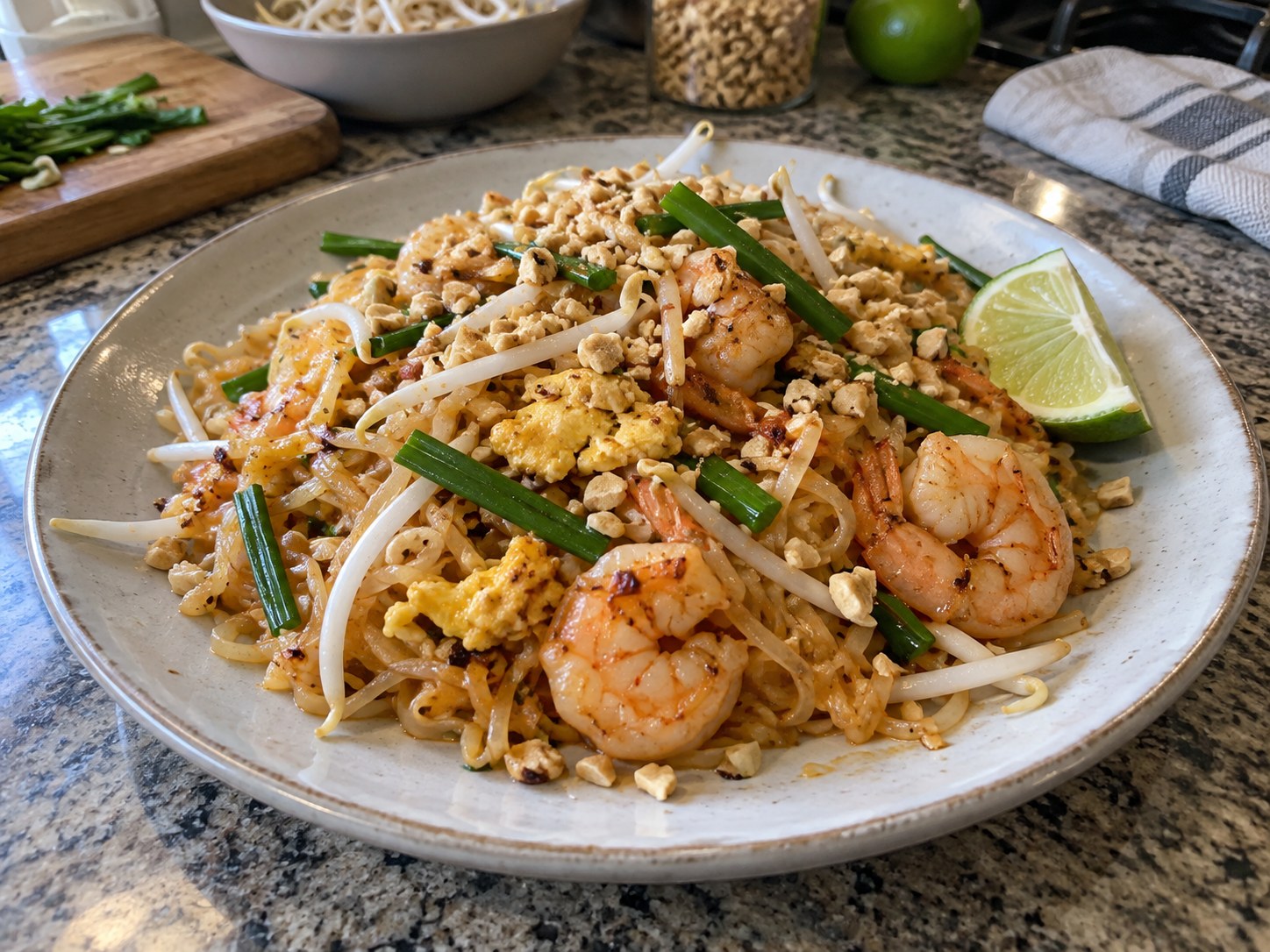
This easy shrimp Pad Thai brings chewy rice noodles, a bright tamarind sauce, tender shrimp, egg, peanuts, and crisp bean sprouts together in one hot pan. The prep is mostly chopping and soaking; once the wok is hot, the stir-fry moves quickly, so set every ingredient within reach first.
Pad Thai is a Thai stir-fried noodle dish whose familiar sweet-sour-savory balance comes from ingredients such as tamarind, fish sauce, and sugar. Recipes vary from kitchen to kitchen; this home version keeps the ingredient list manageable while holding on to the defining contrast of tangy sauce, soft noodles, crunchy sprouts, and peanuts. For a culinary overview, see this Tourism Authority of Thailand guide to regional food.
Why This Pad Thai Recipe Works
- Prep first, cook fast: Pad Thai is easier when the sauce, garnishes, and noodles are ready before the pan heats.
- A balanced sauce: Tamarind provides tartness, fish sauce adds savory depth, and brown sugar rounds the edges.
- Good texture in every bite: Shrimp, egg, noodles, peanuts, and sprouts offer a mix of tender and crisp.
Ingredients and Smart Substitutions
Flat rice noodles are sold in different widths and may need different soaking times, so use the package as your guide. Tamarind paste gives the most characteristic tartness; lime is best served at the table rather than used as a full substitute. Fish sauce is salty, so taste the finished noodles before adding extra salt. For a meat-free variation, replace the shrimp with firm tofu and use a vegetarian fish-sauce alternative.
Tips for the Best Results
A wide wok or skillet helps the noodles contact the hot surface. Cook the shrimp first and remove it before the noodles go in; this keeps it tender while the noodles absorb the sauce. If your pan is small, stir-fry in two batches so the noodles fry instead of steam. Keep a little warm water nearby to loosen the sauce if the noodles are still firm.
The official tourism guide describes Pad Thai with rice noodles, egg, peanuts, bean sprouts, scallions, fish sauce, and tamarind, a useful reminder that the finishing textures matter as much as the sauce. This recipe is a home adaptation rather than a claim to represent every regional or restaurant version.
Recipe Card
The recipe card below has the full ingredient list, timing, and step-by-step method. Follow the package directions where ingredient brands differ, and adjust seasoning to taste.

Easy Shrimp Pad Thai
Ingredients
Method
- Place the rice noodles in a large bowl and cover with warm water. Soak until flexible but still slightly firm, about 20 to 30 minutes, then drain. Follow the package directions if they call for a different method.
- Whisk the tamarind paste, fish sauce, brown sugar, and optional chili flakes with 2 tablespoons of water until the sugar dissolves. Taste; the sauce should be tangy, salty, and lightly sweet.
- Pat the shrimp dry. Beat the eggs in a small bowl. Set the bean sprouts, scallions, peanuts, and lime beside the stove so they are ready to add quickly.
- Heat 1 tablespoon of oil in a large wok or skillet over medium-high heat. Add the shrimp in one layer and cook, turning once, until opaque and cooked through, about 2 minutes per side. Transfer to a plate.
- Add the remaining oil and garlic. Stir for 20 seconds, then pour in the eggs. Scramble just until softly set. Add the drained noodles and sauce; toss continuously until the noodles are tender and glossy, 2 to 4 minutes. Add a splash of water if the pan looks dry.
- Return the shrimp to the pan. Add all the bean sprouts and half the scallions; stir-fry over high heat for 2 to 3 minutes, until the sprouts are fully heated through and steaming hot.
- Divide among four plates. Top with the remaining scallions and chopped peanuts. Serve with lime wedges; diners can adjust the sweet, sour, and chili balance at the table.
Estimated Nutrition
Estimated per serving (one-quarter of the recipe), including the shrimp, noodles, egg, peanuts, and sauce. Sodium depends especially on the fish sauce brand, and noodle weight varies by product.
| Nutrient | Per serving |
|---|---|
| Calories | 520 kcal |
| Carbohydrates | 70 g |
| Protein | 31 g |
| Total fat | 17 g |
| Saturated fat | 4 g |
| Fiber | 4 g |
| Total sugars | 13 g |
| Sodium | 890 mg |
Storage and Food Safety
Pad Thai is best freshly cooked because rice noodles firm and clump as they cool. Refrigerate leftovers in a shallow airtight container within 2 hours and use within 3 days. Reheat in a skillet with a tablespoon of water, stirring until steaming hot; add fresh lime and peanuts after reheating. Do not leave shrimp or cooked noodles at room temperature for extended periods.
Frequently Asked Questions
Can I use chicken instead of shrimp?
Yes. Slice boneless chicken thinly and cook it through before transferring it from the pan. Keep the rest of the steps the same, adding a splash of water if the pan becomes dry.
What if I cannot find tamarind paste?
The flavor will be different, but you can use a little extra lime at the table for acidity. Avoid replacing all the tamarind with lime in the sauce, which can make it sharply sour.
How do I keep the noodles from breaking?
Soak them only until flexible, drain well, and toss gently over high heat. If they are still too firm, add a spoonful of water and keep tossing rather than soaking them until fully soft.
More SkilletGlow Recipes
Want another Asian-inspired meal? Try our homemade shoyu chicken ramen for a cozy noodle bowl, or our shrimp sushi rolls for a hands-on dinner project.