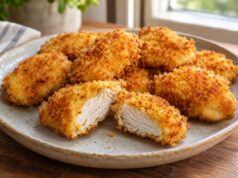
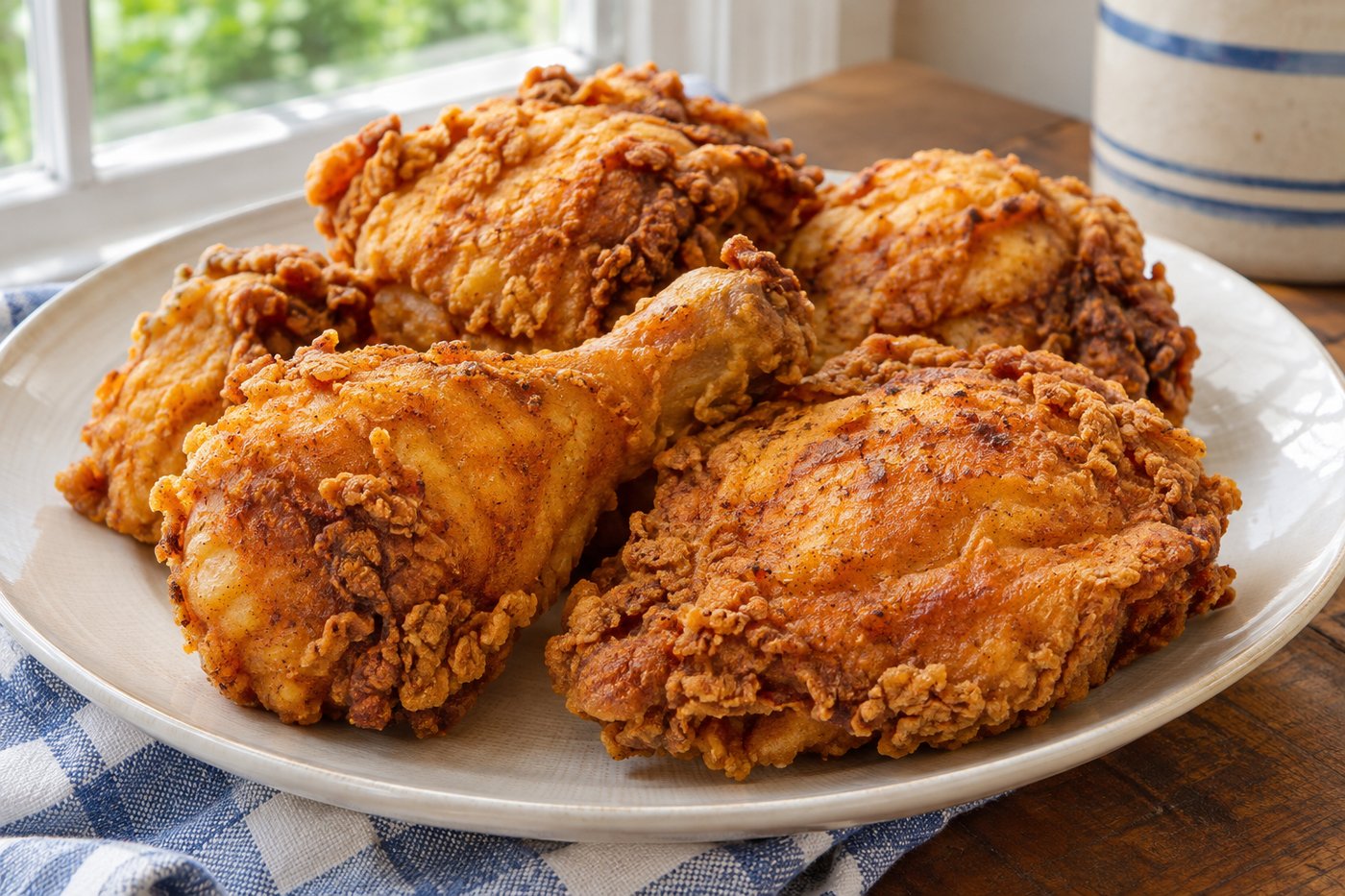
This Southern-style fried chicken is the deep-fried counterpart to the blog’s oven-fried version. A refrigerated buttermilk marinade seasons the meat, and flour mixed with cornstarch forms a craggy crust. The recipe uses thighs and drumsticks of similar size to make cooking easier to manage. A thermometer for the oil and a separate instant-read thermometer for the chicken are essential for controlling the process.
What makes this recipe work
Keep raw chicken and its breading station separate from the clean rack used for cooked pieces. Letting the coating rest briefly helps it adhere. Adding too much chicken at once drops the oil temperature and makes the crust greasy. If oil smokes, turn off the heat and let it cool; never add water to hot oil or an oil fire. Use a deep pan with headroom, sturdy tongs and a stable burner. Skin and meat near the bone can look darker even when safely cooked, so use a thermometer rather than color.

Planning your cooking
Yield: 6 servings. Allow approximately 30 minutes of preparation, 45 minutes of cooking, and 240 minutes of marinating, rising or resting. The minimum 4-hour refrigerated marinade is additional to active preparation and frying. Frying time assumes two batches.

Southern Fried Chicken with a Buttermilk Crust
Ingredients
Method
- Mix buttermilk with 1 teaspoon salt, 1/2 teaspoon pepper and 1 teaspoon paprika in a covered nonreactive container. Add chicken and refrigerate at least 4 hours or up to 12 hours. Do not marinate at room temperature. Set a clean wire rack over a tray for cooked chicken.
- Mix flour, cornstarch, baking powder, remaining salt, pepper and paprika, garlic powder, onion powder and optional cayenne in a wide dish. Lift chicken from buttermilk, let excess drip, then press firmly into the flour mixture. Set coated chicken on a separate rack for 10–15 minutes while oil heats. Discard raw marinade and unused contaminated flour.
- Heat 1 1/2 inches oil in a heavy deep skillet or Dutch oven to 325°F (163°C), using a frying thermometer. Keep the pan no more than half full and lower pieces carefully away from you. Fry in batches without crowding, adjusting heat to hold roughly 300–325°F (150–163°C).
- Turn occasionally and fry about 15–20 minutes per batch, until the crust is deeply golden and every piece reaches at least 165°F (74°C) in the thickest meat without touching bone. Large thighs may take longer; do not serve based on crust color alone.
- If the crust is ready before the center, transfer to a clean rack on a baking sheet and finish in a 350°F (175°C) oven until 165°F. Drain cooked chicken on the clean rack, not on the raw-chicken tray, and rest 5–10 minutes before serving. The 45-minute cooking allowance assumes two batches; add time for a smaller pan.
Notes
Questions and useful substitutions
Can I use boneless chicken? Yes, but cooking time becomes much shorter; check for 165°F and avoid treating the bone-in timing as a guide. Can I reuse the oil? Cool completely, strain and store appropriately only if it has not burned or developed off odors. Why is the crust greasy? Low oil temperature or overcrowding are common causes.
Storage and reheating
Refrigerate within 2 hours for 3–4 days. Reheat on a rack in a 375°F (190°C) oven until the center reaches 165°F (74°C). Let frying oil cool completely before handling or disposal. Nutrition is particularly approximate because discarded marinade, unused coating, bones and absorbed frying oil vary by batch.
For the food-safety basis of the temperature checks, see the CDC guidance on cooking and handling chicken.
Estimated nutrition per serving
Rough estimates for one of 6 equal portions. Suggested sides, optional toppings and additional seasoning are excluded. Actual values depend on brands, edible yield and portions; these are not laboratory measurements.
| Nutrient | Amount |
|---|---|
| Calories | 590 kcal |
| Carbohydrates | 24 g |
| Protein | 43 g |
| Total fat | 36 g |
| Saturated fat | 9 g |
| Fiber | 1 g |
| Total sugars | 3 g |
| Sodium | 900 mg |
What to cook next
For a complementary side or another dinner idea, explore oven-fried chicken and mashed potatoes. Browse the dinner collection for more ideas.