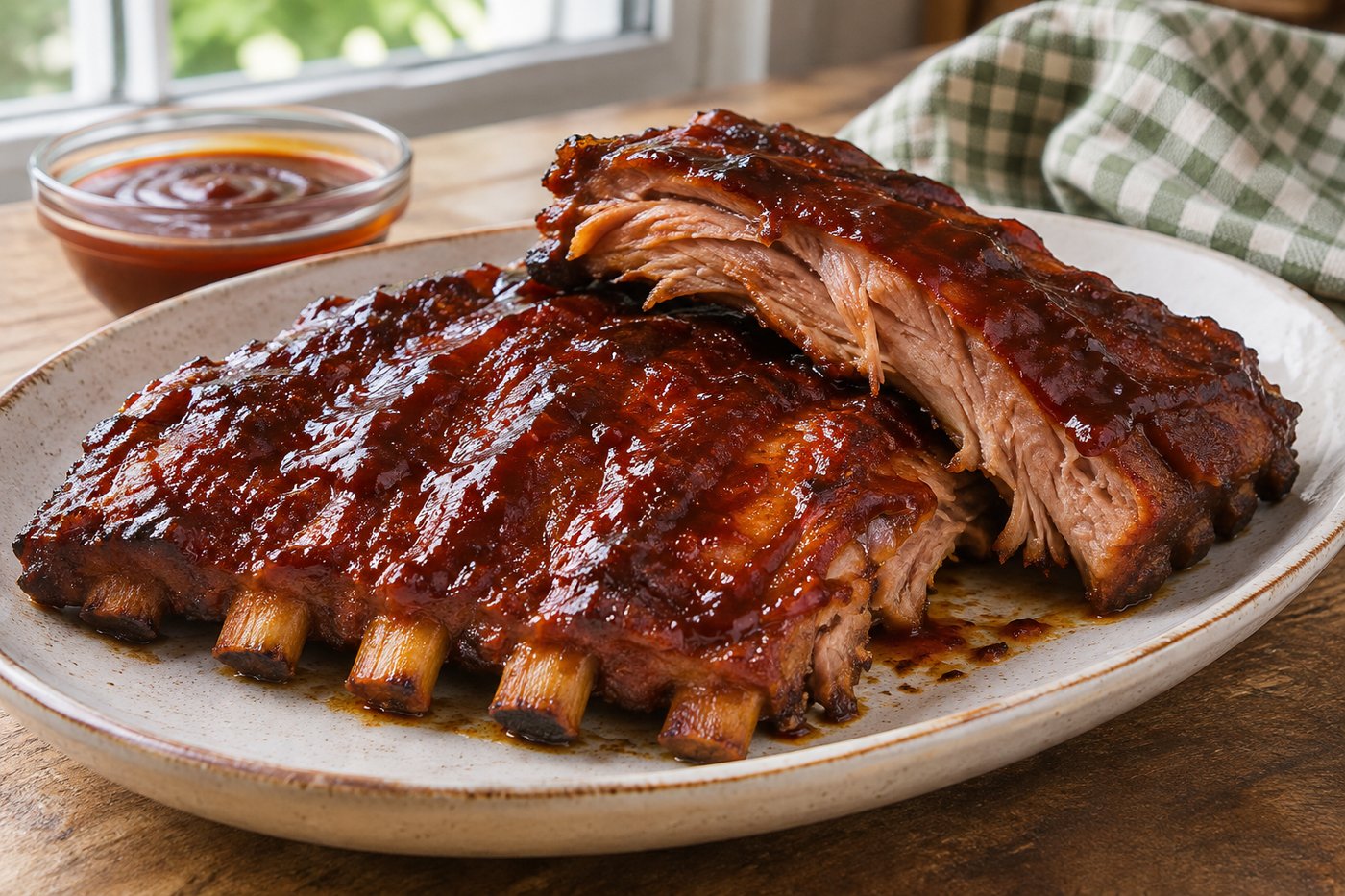
These oven ribs cook slowly inside foil before a short hot finish sets the barbecue glaze. The method gives tender pork without needing an outdoor smoker, although smoked paprika cannot reproduce actual wood smoke. Baby back ribs are the cut used for the timing here; spare ribs are larger and usually take longer. Plan for roughly four to five hours including preparation, tenderness checks and resting.
What makes this recipe work
Use a rimmed tray to catch escaping juices and keep foil seams above the liquid level. Do not brush sugary barbecue sauce onto the ribs before the long cooking stage; it belongs near the end. A thermometer can confirm safe temperature, but tenderness is best checked between the bones with a skewer. Do not test against a bone, which can distort the reading. If the packets dry out before the meat softens, add a small splash of hot water and reseal. The final high heat should make the sauce tacky, not charred black.

Planning your cooking
Yield: 6 servings. Allow approximately 20 minutes of preparation, 270 minutes of cooking, and 10 minutes of marinating, rising or resting. Several preparation steps can overlap with cooking; read the complete method before heating the pan. Follow the texture and temperature cues rather than the timer alone.

Slow-Cooked BBQ Pork Ribs with a Sticky Oven Finish
Ingredients
Method
- Heat oven to 275°F (135°C). Line a rimmed baking sheet with two large sheets of heavy foil for each rack. Pat ribs dry. If a tough membrane remains on the bone side, lift an edge with a blunt utensil and pull it off with a paper towel; do not cut toward your hand.
- Mix sugar, paprika, garlic powder, onion powder, salt, pepper and optional cayenne. Rub evenly over both racks. Lay each rack meat-side up on its foil, turn foil edges upward and add half the apple juice around each rack without rinsing off the rub.
- Seal packets tightly, allowing a little space above the meat. Place on the rimmed tray and bake 3–4 hours. Begin checking at 3 hours, opening carefully to release steam. Ribs are tender when a skewer slides between bones with little resistance and the rack bends easily; continue covered in 20-minute increments if firm.
- Carefully open and drain packets, saving juices if desired. Mix barbecue sauce and vinegar. Brush about two-thirds of the sauce over the ribs. Raise oven to 425°F (220°C) and return ribs uncovered for 10–15 minutes until the glaze is sticky and bubbling, watching closely because sugar burns.
- Rest 10 minutes, then cut between bones into portions and serve remaining sauce separately. Pork must reach at least 145°F (63°C) with a 3-minute rest for safety, but ribs generally need a much higher temperature and longer cooking to become tender. Bone weight, rack thickness and sauce brand affect yield and nutrition substantially.
Notes
Questions and useful substitutions
Can I use spare ribs? Yes, allow additional covered cooking time and rely on tenderness checks. Can I prepare ahead? Cook until tender, cool promptly and refrigerate, then reheat covered to 165°F before glazing. Is the listed weight edible meat? No, it includes bones; actual meat portions vary, so nutrition is only approximate.
Storage and reheating
Refrigerate within 2 hours for 3–4 days. Reheat covered at 300°F (150°C) with a splash of water until meat reaches 165°F (74°C), then uncover briefly to refresh the glaze. Freeze cooked portions for up to 3 months for best quality. Keep served dipping sauce separate from unused sauce.
Estimated nutrition per serving
Rough estimates for one of 6 equal portions. Suggested sides, optional toppings and additional seasoning are excluded. Actual values depend on brands, edible yield and portions; these are not laboratory measurements.
| Nutrient | Amount |
|---|---|
| Calories | 720 kcal |
| Carbohydrates | 24 g |
| Protein | 48 g |
| Total fat | 48 g |
| Saturated fat | 17 g |
| Fiber | 1 g |
| Total sugars | 20 g |
| Sodium | 1100 mg |
What to cook next
For a complementary side or another dinner idea, explore creamy coleslaw and skillet cornbread. Browse the dinner collection for more ideas.