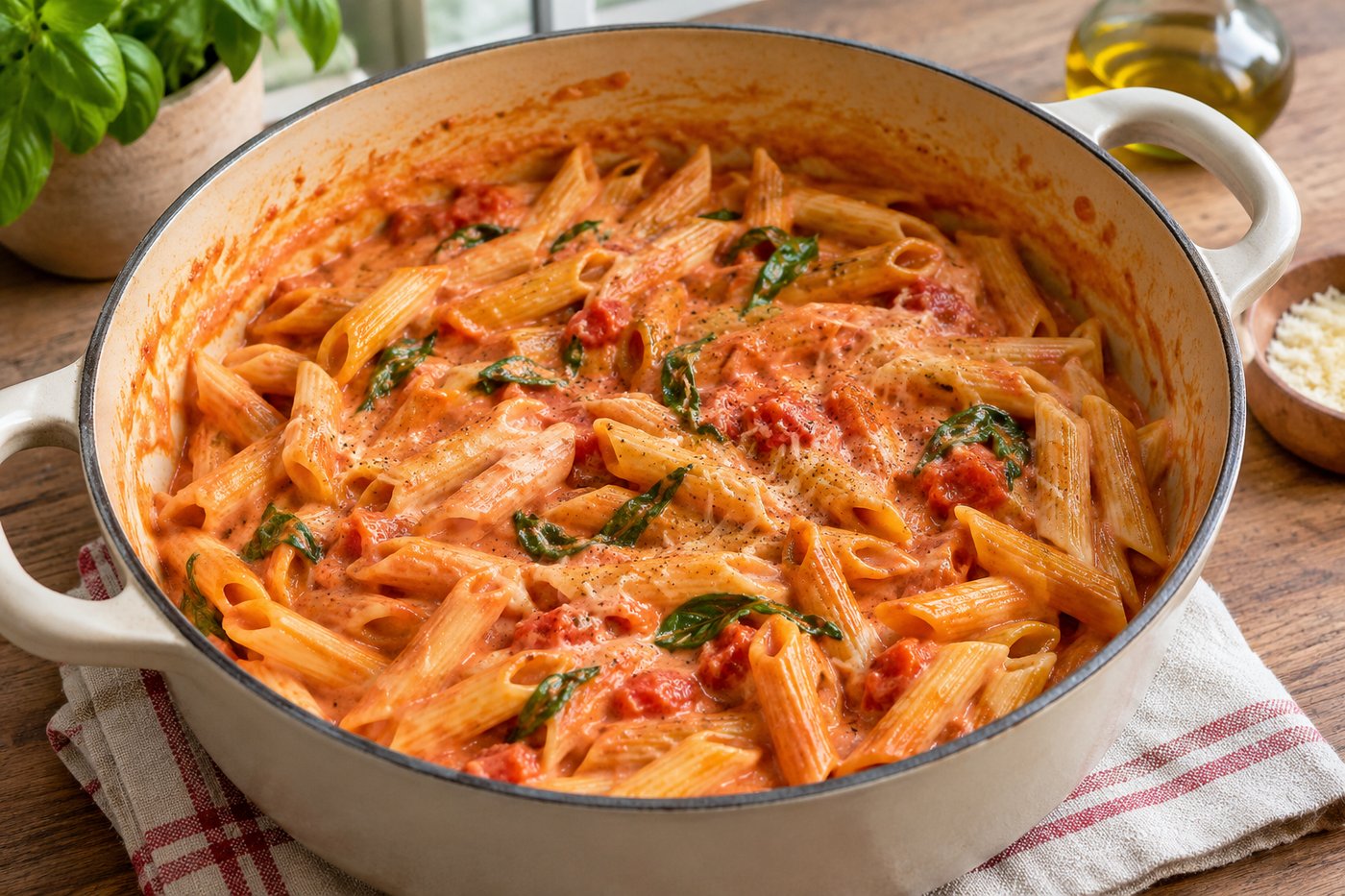
This one-pot tomato pasta cooks the noodles directly in the sauce, so their starch gives the finished dish a creamy coating. Onion and tomato paste build flavor before broth is added, and a modest amount of cream rounds out the tomatoes. It is a practical dinner for evenings when you want one pot to wash, with enough liquid adjustment built into the method for different pasta shapes.
What makes this recipe work
Use the listed amount of dry pasta and a similar short shape; very large shapes or long strands change the liquid needs. A wide pot evaporates faster than a narrow one, so keep hot water nearby. Stir frequently once the noodles begin to soften because starch settles on the bottom. Add the cheese over low heat so it melts smoothly. Freshly grated Parmesan disperses more easily than a coarse packaged shred. The pasta should be a little looser than you want at the moment you turn off the heat.

Planning your cooking
Yield: 4 servings. Allow approximately 10 minutes of preparation, 22 minutes of cooking. Several preparation steps can overlap with cooking; read the complete method before heating the pan. Follow the texture and temperature cues rather than the timer alone.

One-Pot Creamy Tomato Pasta with Basil
Ingredients
Method
- Use a wide heavy pot with a lid, about 4 quarts in capacity. Heat olive oil over medium heat and soften onion for 5 minutes. Add garlic and tomato paste; cook 1 minute, stirring until the paste darkens slightly without burning.
- Add crushed tomatoes, broth, salt and pepper and bring to a gentle boil. Stir in the dry pasta and make sure it is mostly submerged. Reduce to a steady simmer and leave the lid slightly ajar.
- Cook 12–16 minutes, stirring every 1–2 minutes and scraping the bottom to prevent sticking. Start tasting at the packet’s minimum cooking time; the acidic sauce can make it take longer. Add hot water in 1/4-cup increments if liquid runs low before the pasta is tender.
- When the pasta is just tender and a little loose sauce remains, reduce heat to low. Stir in cream and Parmesan and warm 1–2 minutes without a hard boil. If the sauce is already thick, add another splash of water before the cheese.
- Remove from the heat and fold in basil. Rest 2 minutes, then divide among four bowls. The sauce thickens as it stands; loosen leftovers with water rather than extra cream. Taste before adding more salt because the broth and Parmesan vary in saltiness.
Notes
Questions and useful substitutions
Can I use whole-wheat pasta? Yes, but expect a longer simmer and extra hot water; follow the noodle texture rather than the listed time. Can I omit cream? Use a little pasta cooking liquid and extra Parmesan for a lighter, less creamy sauce. Is it freezer friendly? The sauce freezes, but cooked pasta softens; refrigeration is the better option for this complete dish.
Storage and reheating
Refrigerate in shallow covered containers within 2 hours for up to 3–4 days. Reheat gently with a splash of water, stirring often, until hot throughout. For food safety, leftovers should reach 165°F (74°C). Basil is best added fresh after reheating.
Estimated nutrition per serving
Rough estimates for one of 4 equal portions. Suggested sides, optional toppings and additional seasoning are excluded. Actual values depend on brands, edible yield and portions; these are not laboratory measurements.
| Nutrient | Amount |
|---|---|
| Calories | 560 kcal |
| Carbohydrates | 74 g |
| Protein | 18 g |
| Total fat | 21 g |
| Saturated fat | 11 g |
| Fiber | 5 g |
| Total sugars | 9 g |
| Sodium | 780 mg |
What to cook next
For a complementary side or another dinner idea, explore tomato spinach orzo and creamy pesto pasta. Browse the dinner collection for more ideas.