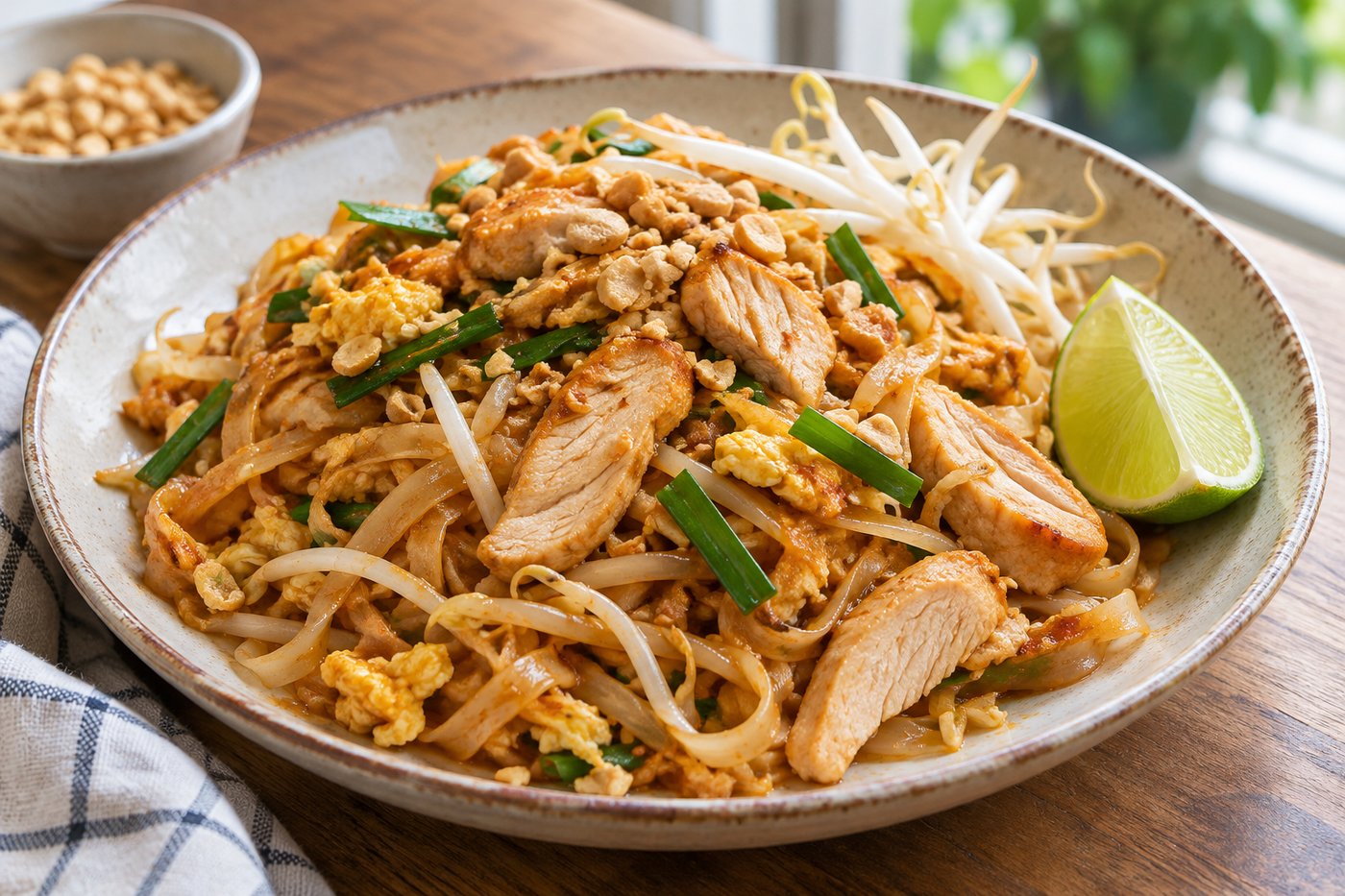
Chicken pad Thai is a quick noodle dinner with a tangy-sweet tamarind sauce, egg, peanuts and crisp vegetables. The important preparation happens before the wok gets hot: soak the noodles, mix the sauce and slice the chicken. This version uses prepared tamarind puree for repeatable measuring. Tamarind concentrate is much stronger and should not be substituted spoon for spoon.
What makes this recipe work
A crowded small pan makes noodles steam and clump. If your skillet is smaller than 12 inches, cook two separate half batches, dividing every component including the sauce. Fish sauce supplies the salt, so no additional salt is listed. Tamarind products differ in acidity: taste the mixed sauce and adjust with a little sugar or water before it contacts raw chicken. The finished noodles should have a thin coating of sauce, not sit in a puddle. Heat the sprouts thoroughly rather than using raw sprouts as a topping.

Planning your cooking
Yield: 4 servings. Allow approximately 25 minutes of preparation, 15 minutes of cooking. Several preparation steps can overlap with cooking; read the complete method before heating the pan. Follow the texture and temperature cues rather than the timer alone.

Chicken Pad Thai with Tamarind and Peanuts
Ingredients
Method
- Soak rice noodles in warm water according to the package, usually 20–30 minutes, until bendable but still firm in the center. Drain thoroughly. Different noodle brands hydrate at different rates; do not boil them fully soft before stir-frying. Mix tamarind puree, fish sauce, sugar and 3 tablespoons water until dissolved.
- Set all ingredients beside the stove. Heat 1 tablespoon oil in a large wok or 12-inch skillet over medium-high heat. Stir-fry chicken in two batches, 3–5 minutes each, until the thickest pieces reach 165°F (74°C). Transfer to a clean bowl.
- Add remaining oil and garlic; stir 20 seconds. Push aside, add eggs and scramble just until set. Add drained noodles and sauce. Toss with two spatulas for 2–4 minutes, lifting rather than crushing the strands.
- If noodles remain firm after the sauce is absorbed, add water 1 tablespoon at a time and toss another minute. Stop once tender and flexible with a slight chew. Avoid pouring in a large amount of water, which makes the bottom mushy.
- Return chicken. Add bean sprouts and scallions and toss 1–2 minutes until sprouts are heated through and the chicken is hot. Divide immediately among four bowls. Scatter peanuts on top and serve lime wedges and optional chili flakes separately.
Notes
Questions and useful substitutions
Can I omit peanuts? Yes, for preference, but the dish still contains egg and fish and may contain other allergens in prepared products. Can I use soy sauce instead of fish sauce? It changes the flavor and sodium; use a little less initially and taste. What if the noodles stick? Add a small splash of water and gently lift them apart rather than adding a lot of oil.
Storage and reheating
Pad Thai is best freshly cooked. Refrigerate leftovers within 2 hours for up to 3 days. Reheat in a skillet with a splash of water, stirring until the chicken reaches 165°F (74°C). The noodles soften during storage. Freezing is possible but produces a less pleasant noodle texture.
For the food-safety basis of the temperature checks, see the CDC guidance on cooking and handling chicken.
Estimated nutrition per serving
Rough estimates for one of 4 equal portions. Suggested sides, optional toppings and additional seasoning are excluded. Actual values depend on brands, edible yield and portions; these are not laboratory measurements.
| Nutrient | Amount |
|---|---|
| Calories | 620 kcal |
| Carbohydrates | 63 g |
| Protein | 36 g |
| Total fat | 25 g |
| Saturated fat | 4 g |
| Fiber | 3 g |
| Total sugars | 14 g |
| Sodium | 1250 mg |
What to cook next
For a complementary side or another dinner idea, explore shrimp Pad Thai and shoyu chicken ramen. Browse the dinner collection for more ideas.